
No products in the cart.

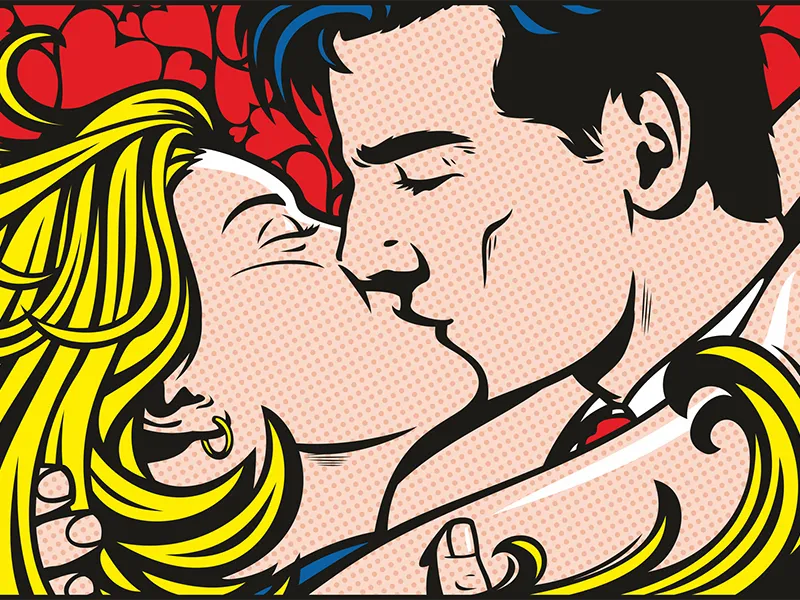
What Is Pop Art?
Pop Art is an art movement that emerged in the 1950s and 1960s and is characterized by the use of images from popular culture, advertising, comics, and everyday objects. The name comes from “popular” culture. Pop art questions the boundaries between “high” and “low” art and reflects the consumer society and media environment of its time.
Key characteristics
- Use of popular and commercial images: brands, advertisements, celebrities, comic panels.
- Bright, saturated colors and strong contrasts.
- Clean lines, flat color areas, and frequent repetition of motifs (seriality).
- Irony, sarcasm, or a detached approach to imagery—sometimes provocative.
- Mixing of techniques: painting, printmaking, collage, sculpture, and readymades.
Major artists and examples
- Andy Warhol: Campbell’s soup, Marilyn Monroe portraits, serial prints.
- Roy Lichtenstein: comic-style panels using Ben-Day dot
- Claes Oldenburg: sculptures of oversized everyday objects.
- Jasper Johns and other American and British artists who shaped the movement’s early look.
Themes and meaning
- Critique and reflection of consumer culture and the mass media.
- Questioning authorship and originality (through series and reproductions).
- Playing with identity and fame—how media shapes celebrity images.
- Democratization of art: using accessible visual language elements.
Techniques and materials
- Silkscreen/serigraphy (especially with Warhol) for repeated reproduction.
- Acrylics and oils on canvas with flat color fields.
- Collage and mixed media, often incorporating found objects.
- Sculptures in metal, plastic, foam—often exaggerated in scale.
Influence and legacy
- Pop Art changed attitudes toward visual culture and advertising and influenced graphic design, fashion, music, and contemporary art.
- It inspired postmodern practices and the idea of the artist as a brand.
- Contemporary artists and designers continue to draw on the movement’s techniques and aesthetics.
Where to see Pop Art
- Museums of modern and contemporary art (MoMA, Tate Modern, and others).
- Galleries, themed exhibitions, festivals, and private collections.
- Reproductions, books, and online archives provide broader access.
Collecting tips
- Reproductions and limited-edition prints are more affordable; originals and early prints carry higher value.
- Research provenance, edition numbers, and signatures; buy from reputable galleries or auction houses.
- Consider materials and storage—some prints fade in direct sunlight.
Conclusion
Pop Art is both visually accessible and conceptually provocative, overturning traditional ideas about art by bringing the aesthetics of mass culture into the gallery space. Its influence remains strong today—in art, design, and the visual environment around us.

Leave a reply
You must be logged in to post a comment.